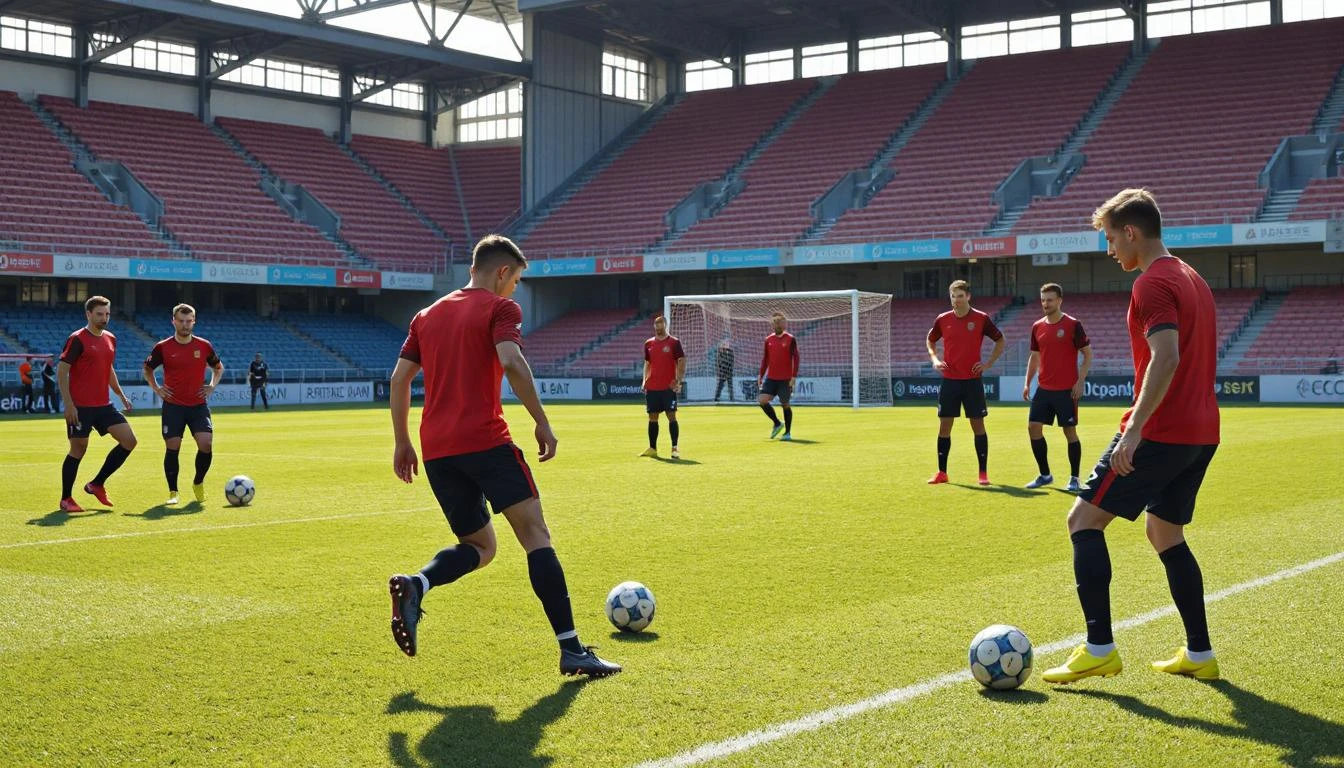
Match Analysis Techniques for Better Insights

In modern football culture, every match tells a deeper story than what the scoreboard reveals. Fans today are no longer satisfied with surface-level highlights,they want to understand patterns, decisions, and hidden tactical layers that shape the outcome. The game has quietly evolved into a complex system of decisions, timing, and spatial intelligence that rewards those who learn how to read it properly.
This shift in perspective is where football match analysis becomes essential. It is no longer just a professional coaching tool, but a global method used by analysts, fans, and scouts to decode the flow of the game. When paired with advanced performance analysis soccer, it opens a structured way to interpret movement, strategy, and decision-making across every phase of play.
The Importance Of Match Analysis In Football
Modern football is not just played on the pitch,it is studied, broken down, and reconstructed through layers of insight. Every pass, press, and positional shift carries meaning that can only be fully understood through structured analysis.
performance analysis soccer has become a critical foundation in understanding how teams function under pressure, how they adapt tactically, and how individual actions contribute to collective outcomes.
At the heart of it all lies football match analysis, a discipline that transforms raw gameplay into meaningful intelligence. It allows coaches and analysts to identify why a team wins, why it struggles, and how small adjustments can completely shift momentum. As football analyst Michael Cox once said, “The best teams are not just reactive,they are prepared for every possible reaction.” That preparation comes directly from analysis.
Understanding tactical decisions during a match
Tactical decisions are the invisible hand guiding every phase of play. Whether a team decides to press high, sit deep, or switch formations mid-game, each decision reflects a calculated response to the opponent’s structure. Analysts study these micro-adjustments to understand intent rather than just action.
How analysis improves team performance
When teams consistently apply structured review processes, improvement becomes measurable. Errors reduce, passing efficiency increases, and defensive organization becomes more stable. In this environment, performance analysis soccer acts like a feedback loop that sharpens decision-making over time.
Role of data in modern football analysis
Data has become the silent architect of modern football understanding. Metrics like expected goals (xG), pass progression chains, and heat maps reveal patterns invisible to the naked eye. According to sports scientist Dr. Rafael Ortega, “Data does not replace intuition,it refines it into something more reliable.”
Key Techniques In Football Match Analysis
To truly understand the game, one must move beyond observation and into interpretation. The techniques behind analysis allow hidden structures to surface, revealing how matches are constructed moment by moment.
performance analysis soccer plays a key role in bridging raw statistics with real tactical context, helping analysts translate numbers into actionable insights.
Breaking down team formations and tactics
Formations are dynamic systems rather than fixed shapes. A 4-3-3 can shift into a 3-2-5 in possession, depending on the team’s strategy. Analysts focus on these transitions to understand how teams control space and tempo throughout the match.
Studying opponent strengths and weaknesses
Every team carries patterns,some predictable, some hidden. Studying these patterns allows analysts to anticipate movements, exploit weaknesses, and neutralize threats. This is where long-tail strategic thinking like how to analyze opponent tactics before kickoff becomes extremely valuable.
Reviewing player performance during matches
Individual contributions matter just as much as collective structure. Analysts evaluate passing decisions, defensive positioning, and off-ball movement. These micro-actions form the foundation of broader tactical outcomes and are essential components of football match analysis frameworks.
Tools And Methods For Better Match Analysis
The evolution of football intelligence has been deeply influenced by technology. Today, analysis is no longer limited to observation,it is powered by digital systems, algorithms, and advanced visualization tools.
performance analysis soccer tools allow deeper interpretation of match dynamics, making it possible to evaluate performance with unprecedented precision.
Using video analysis for deeper insights
Video breakdown remains one of the most powerful tools in football. Frame-by-frame review allows analysts to detect spacing errors, missed passing lanes, and tactical inefficiencies that are invisible during live play.
Applying statistics in match evaluation
Statistical models bring objectivity into football evaluation. Metrics like xG, possession value, and pressing efficiency help quantify performance. These indicators form the backbone of modern football match analysis, turning subjective opinions into measurable evidence.
Identifying patterns in game strategy
Patterns are where prediction begins. Analysts track repeated behaviors such as overlapping runs, pressing triggers, and build-up structures. Over time, these patterns reveal a team’s strategic identity and long-term tendencies.
Improve Football Understanding With Match Analysis Skills
Understanding football at a deeper level requires patience, observation, and curiosity. It is not about memorizing numbers, but about recognizing patterns that repeat across different matches and competitions. The more games you analyze, the clearer these patterns become.
As legendary coach Johan Cruyff once said, “Football is a game of mistakes. Whoever makes the fewest wins.” That simplicity hides a deeper truth: analysis is what helps reduce those mistakes before they happen. When you start applying football match analysis consistently, the game begins to slow down in your mind, revealing structure behind chaos.